
Product · web
QuickEat
Guests order from their table, the floor follows live, the owner runs it from a phone.
quickeat.bj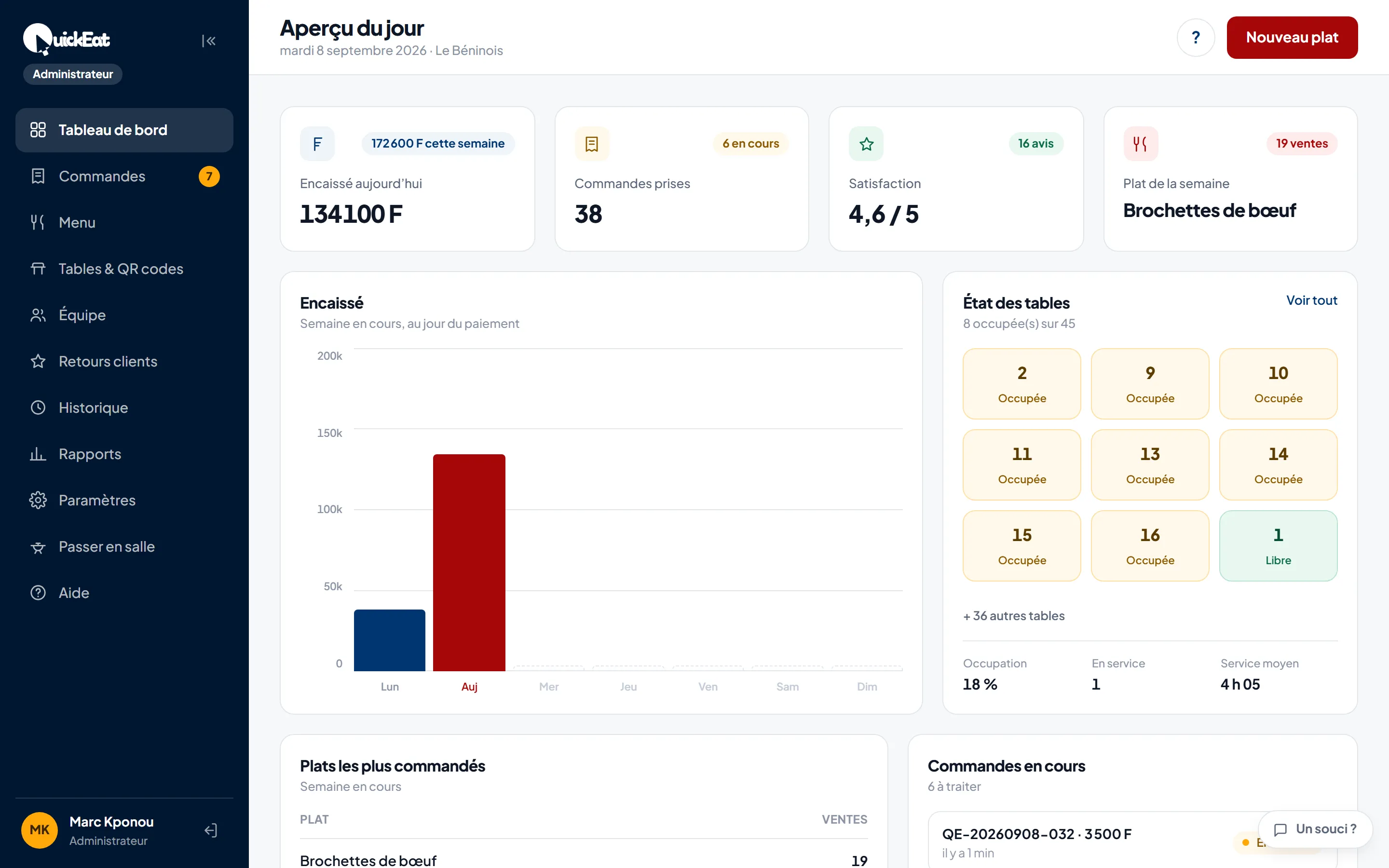
The problem
In a Cotonou maquis or brasserie, an order travels back and forth: the guest calls, the waiter writes it on a slip, the kitchen waits for that slip.
Slips get lost between the pass and the table, the bill for a table that ordered three rounds is rebuilt from memory, and the owner only knows what sold at the end of the day.
What was built
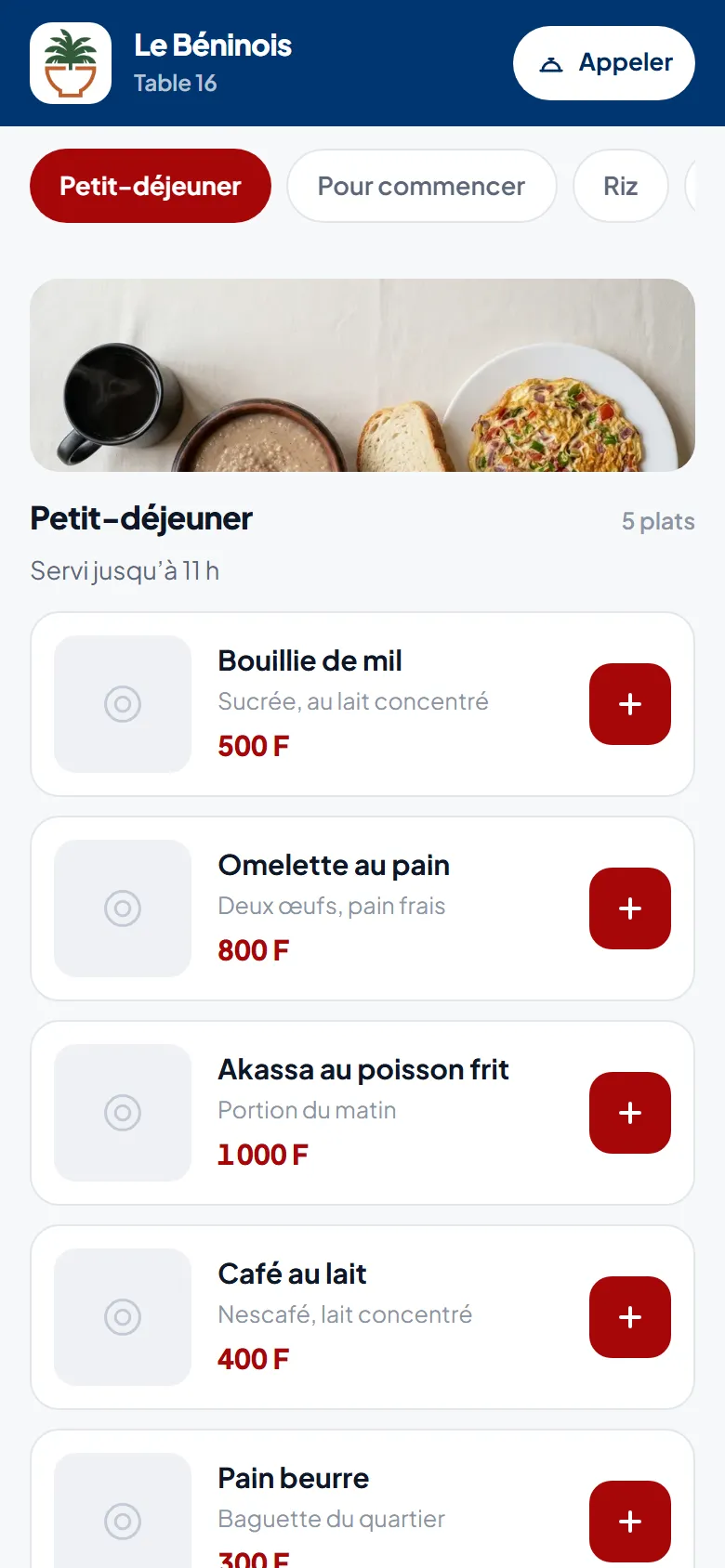
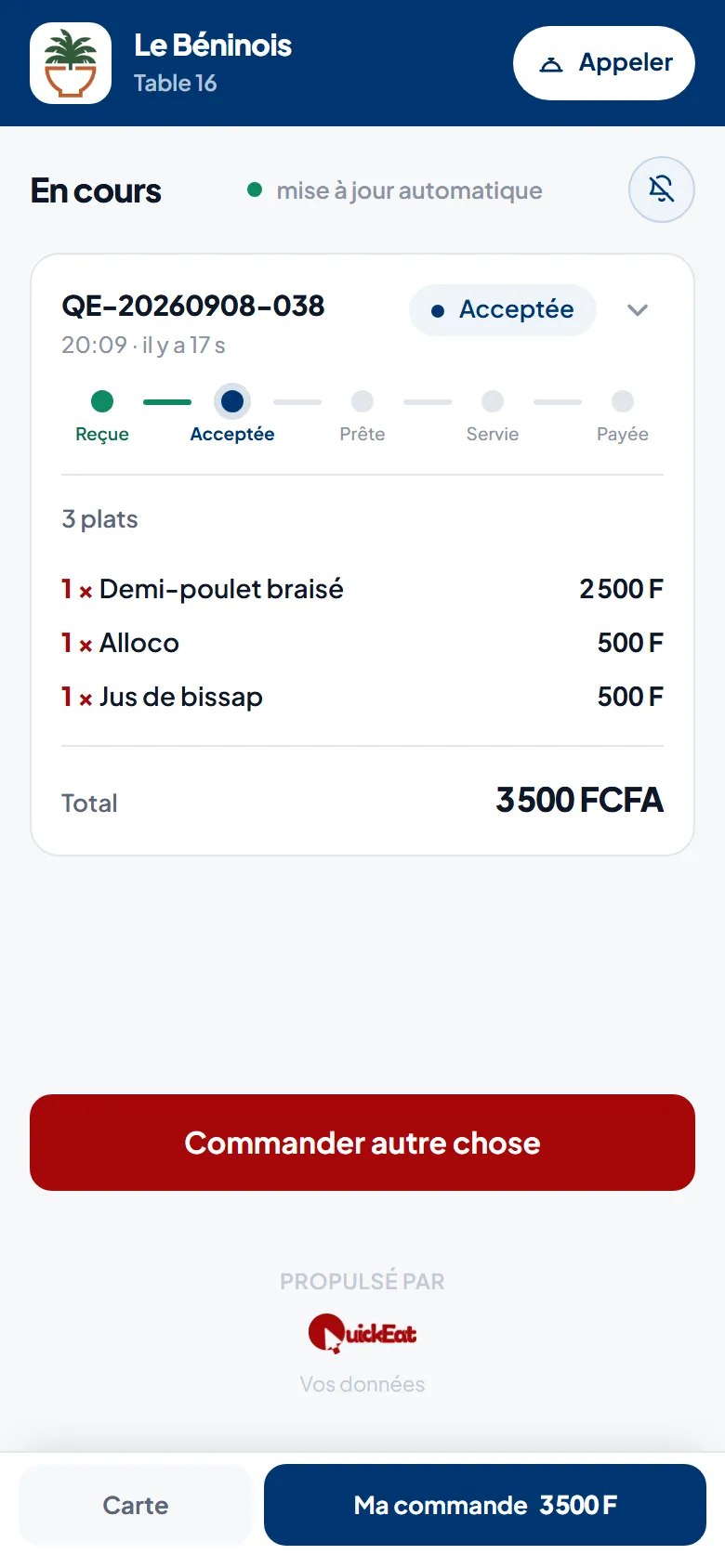
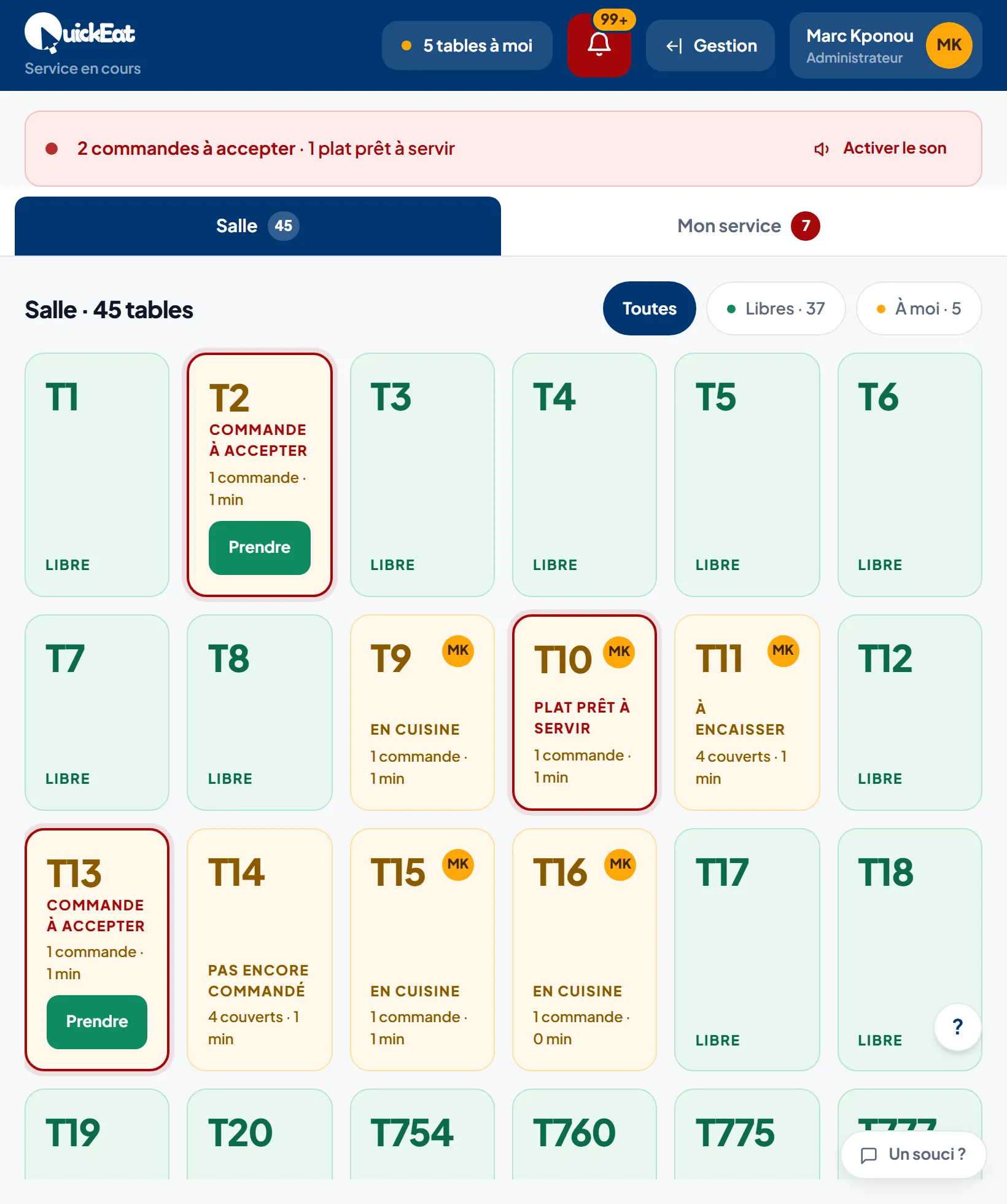
QuickEat connects the three people in the room. Payment stays with the restaurant: guests pay as they always have, the waiter only records how.
My part
Within the Layers-Tec team, I built the web interface: the guest menu, the waiters’ floor screen and the manager back office.
I also contributed to several changes in the FastAPI backend.
Choices that matter
The API contract is the source of truth
The interface’s TypeScript types are generated from the API’s OpenAPI schema, never hand-written. A renamed field breaks the build, not a guest’s screen.
Built for a busy room
Touch targets of at least 44 px, 52 px on the waiters’ tablet, used standing and in a hurry. A status always carries a word, not just a colour.
One vocabulary
Statuses come from the API and are translated once, in one place. Guest, floor and manager read the same words for the same order.
Where it stands
In beta since September 2026, with pilot restaurants in Cotonou.